
[Failure] illuminates the limits of the body and mind, not so we can overcome them through sheer force, but so we can love them more. How else can we become whole (healed) without completely embracing our mistakes and our failures?
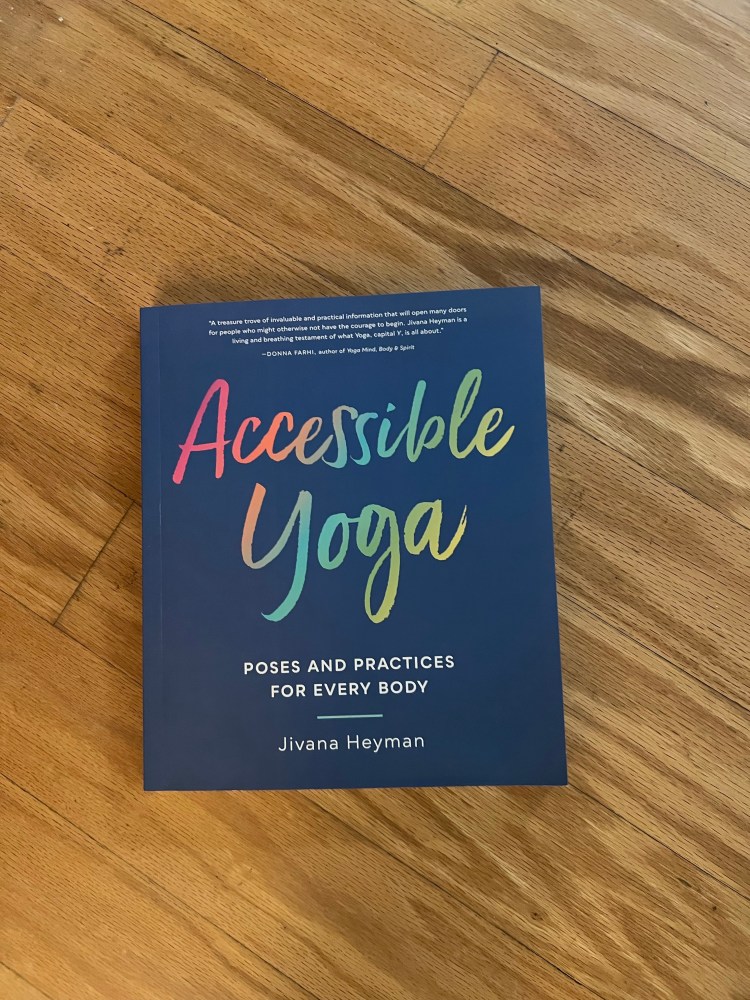
This quote is from Jivana Heyman, founder of Accessible Yoga and author of two books on the subject. I find this to be contrary wisdom, to be sure. My yoga practice exists as a method of preserving body and soul rather than as a place to examine mistakes and failures. And yet, I can remember many times when I crashed and burned a particular pose, as well as times when I felt like a catastrophe for not “fitting” a yoga situation. My yoga practice has highlighted difficult emotions, including being both too much and not enough. Perfectionism, judgment, and other character flaws come up time and time again on the mat. Physically, there are “easy” poses such as “L Pose” that trip me up repeatedly, as well as arm balances that I still have not achieved, let alone mastered, after a decade of faithful practice. And so I have been able – actually, have been forced at times – to use yoga to illuminate disasters both physical and mental. In that sense, confronting failure has been an important part of my practice.
Here’s the conundrum: I don’t want to be completely accepting of my limitations. While I realize that the sages intended asana to be merely a means towards an end, one route to the experience of samadhi, I think that the means are valuable in and of themselves. I live an embodied existence, and because of that I get to experience the world with all my senses. I want to continue to do this for as long as I can, and it’s important to me that I keep moving physically – as I age, it’s definitely a “use it or lose it” proposition.
One of the most important things anyone has ever said to me was a snide comment made at a staff meeting when I was a teacher. At the time, I was in my twenties and most of my colleagues were a decade or so older. This person dropped a pencil on the floor, which then rolled under the table. I went under the table to get it, crawling on my hands and knees. As I returned the pencil to my colleague, she looked at me with a sour expression and told me to enjoy that kind of flexibility while I could. I nodded quietly while my brain exploded. You mean you can’t get up and down from the floor anymore? I plan on being able to do this for my entire life!
Yes, absolutely ableist, something I work against every time I teach a yoga class. Jivana teaches, and I believe, that everyone deserve the fruits of yoga. Can’t do Adho Mukha Svanasana (Down Dog) because of lymphedema? I have several vinyasas that will circumvent a conventional Surya Namaskar (Sun Salutation). Unable to get up and down from the floor? Take part of, or the entire class, in a chair. Uncomfortable in Balasana, (Child’s Pose)? Widen the angle of your knees so that your belly has a place to go. Whether it’s putting two chairs together to make a raised mat or holding onto the wall during balance poses, I’ve got you covered. Everybody has a perfect yoga body, and everyone should be welcome in a yoga class.
And yet. My form is a gift from my Higher Power, and I want it to work as well as it can for as long as it can. If someone is ready to try a pose he, she, or they have struggled with in the past, I’ll break it down to make it possible. Limitations exist, and I ultimately must accept them, but I can also fight the good fight for as many years as I have left. And I will continue to encourage my students to do the same, allowing them to make the choices that work best for their bodies and souls.
I suspect I’m far from finished with this topic, and I’d enjoy hearing your thoughts. Leave a comment here or on social media, and let’s continue the conversation!
 Yoga Cielo Stellato