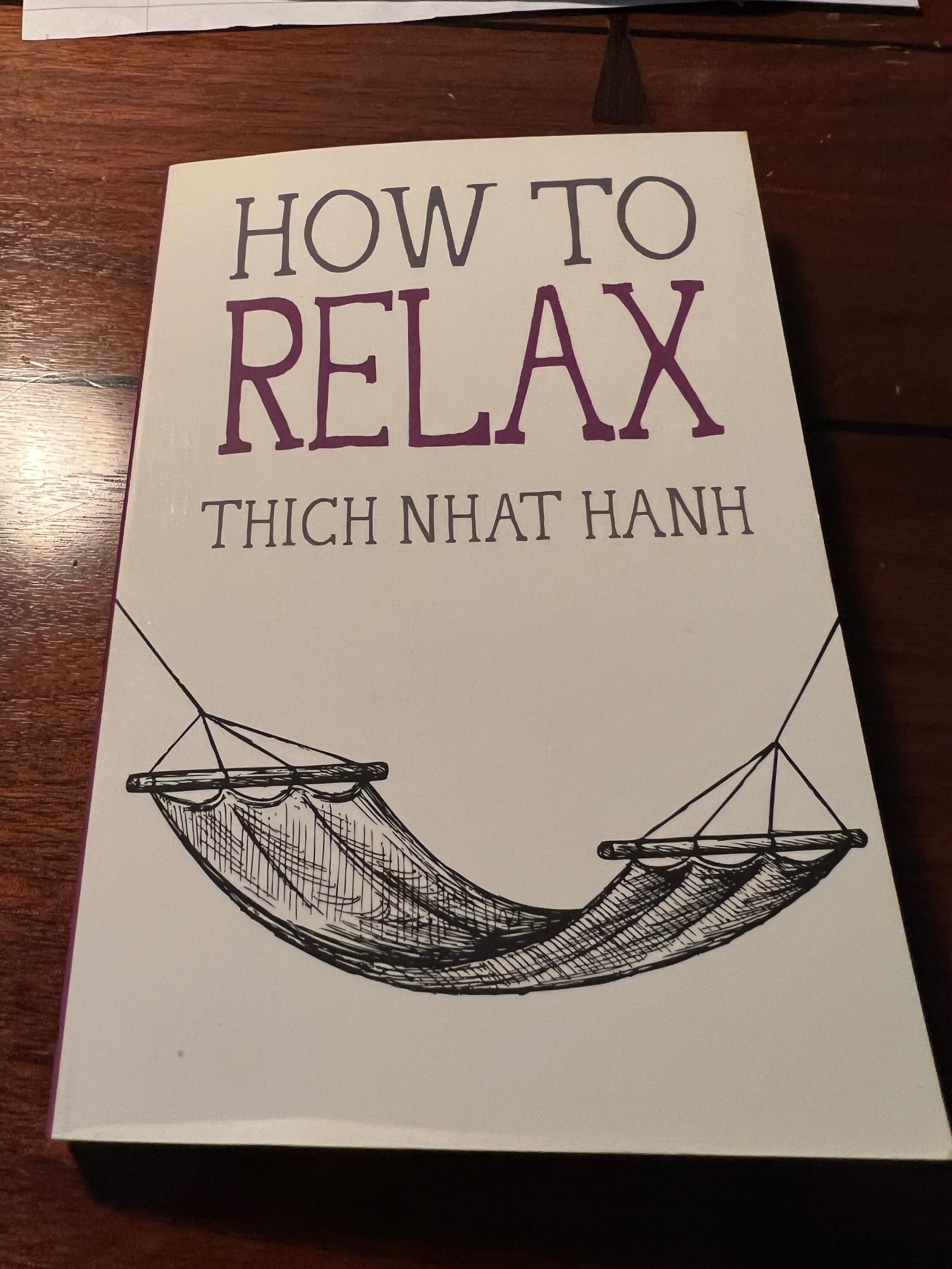
Yes, it’s true – we no longer remember how to relax and renew instinctively. I’ll spare you the diatribe on our rushed, always-having-to-accomplish-something-and-never-stopping-to-enjoy-life culture, because I too find myself sinking into a morass of to-do lists and guilt whenever I slow down. Thankfully, I have my yoga path to remind me that there are other ways to live. I also have the books of Thich Nhat Hanh, which combine common sense with mystical wisdom. If you’ve never read any of his books, How to Relax is an excellent place to start.
At 116 pages and a reduced sized book, this tome doesn’t pretend to be exhaustive. It’s divided into two parts. The longer section, entitled “Notes on Relaxing,” is exactly that – a series of short comments. Hanh begins by noting that we’ve lost our innate relationship to ease, noting “if we can’t rest, it’s because we haven’t stopped running. We began running a long time ago. We continue to run, even in our sleep.” Unlike other members of the animal kingdom, we have to consciously choose to remove ourselves from the merry-go-round of modern life. Why is it that our pets can rest with us while we have trouble resting with them?
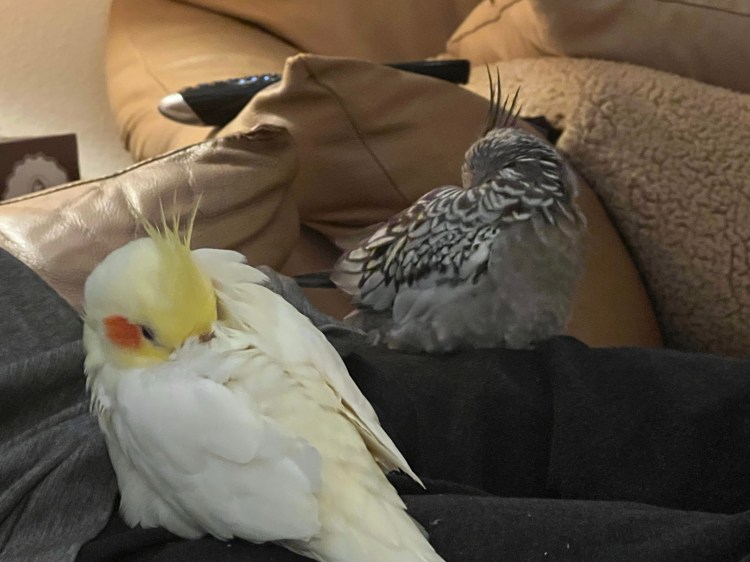
One way to change this is to focus on our breathing. As yoga practitioners know, pranayama is the easiest way to change the state of the human body, and we can always take a few mindful breaths. To do this, of course, we have to stop whatever else we are doing and return to the present moment. Sound familiar? Yogic wisdom, Buddhist wisdom – the truth connects all paths, and we need these reminders from wherever they may be.
Later on in the first section, Hanh notes: “Mindfulness is a practice to give you the courage and energy to go back and embrace your body and your feelings and emotions, even if they’re unpleasant. Even if it seems they may destroy you, go back and embrace them and help them to transform.” Uncomfortable advice, but so necessary for us to move forward. How do we do this? By accepting where we are and allowing it to transform from there.
Part Two, entitled “Meditations for Resting and Relaxing,” is a compendium of specific procedures, from working with the sound of a bell to the full practice of deep relaxation. Hanh gives little poems to chant that allow us to bring our mind into the experience. Again, there is no order for what to use – perhaps try each of the ideas and then go with what works best.
It’s not necessary to read the How to Relax cover to cover, although it’s easy enough to do. I keep my copy by my bed so that I can open at random and read a passage before I go to sleep. Hanh covers all sorts of topics here: ideas that we need to release, changing views of happiness, even how to work with the sound of snoring. Always, Hanh comes back to sitting with the breath and releasing everything but the present moment. Admittedly, this is difficult in practice, but he reminds us that this doesn’t have to be all or nothing. Even five minutes on a regular basis is good for us!
I recommend this book precisely because of its simplicity. While it’s important to continue to study yoga and the various parts of the Eight-Fold Path, it’s also good to be reminded of specific practices. Whether we’re facing a bout of insomnia or feeling stressed out from all of our activities, Hanh’s slim tome reminds us to stop periodically and rest. So simple, yet so hard.
Hanh, Thich Nhat. How To Relax. Parallax Press, Berkeley, California, 2015. ISBN: 978-1-941529-08-9.
 Yoga Cielo Stellato