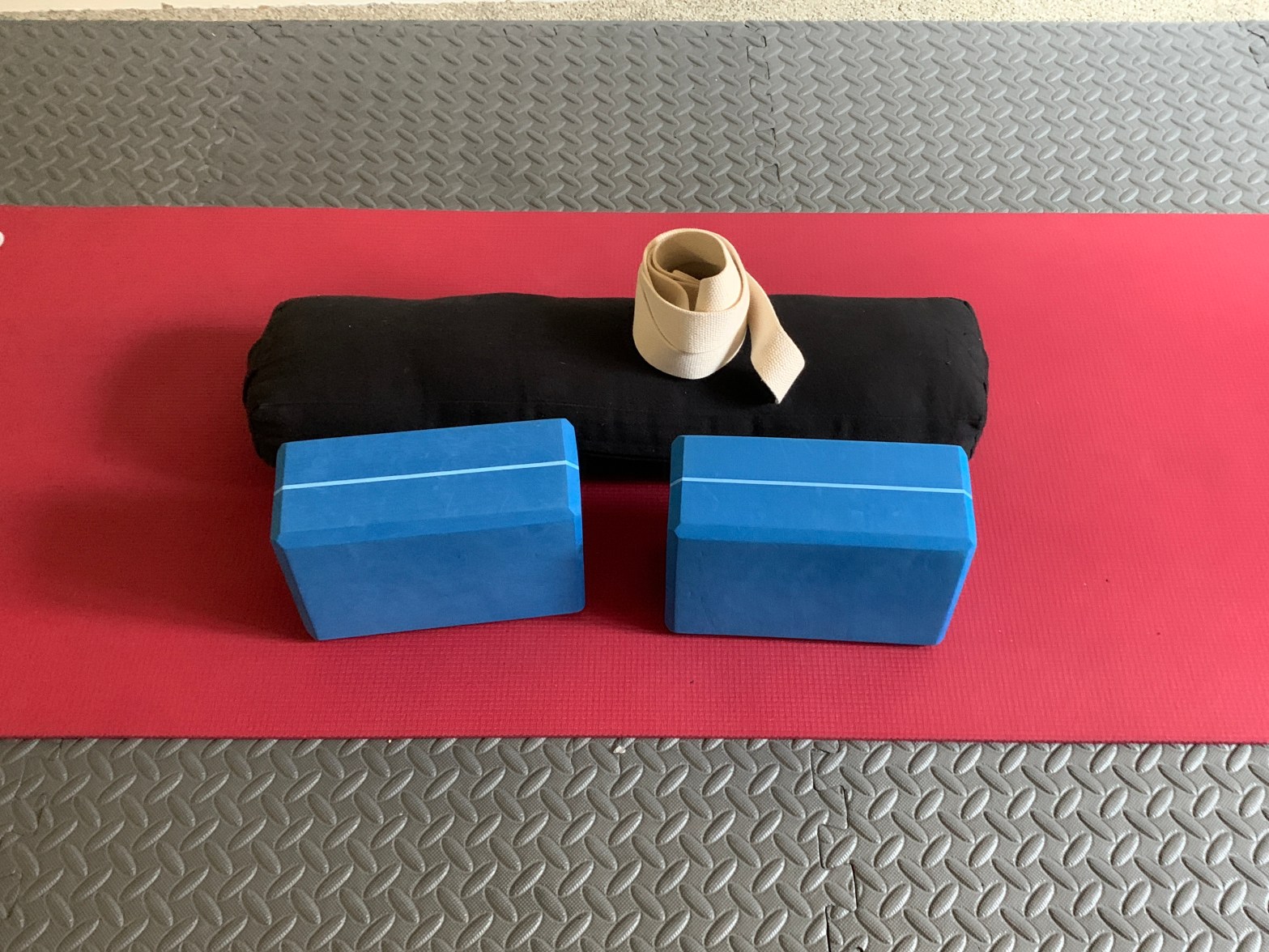
At some point, every yoga practitioner using a borrowed mat has looked down and wondered who else has used it, and how long ago it has been washed. Generally, this is when the thought of buying your own surfaced in pre-pandemic times; once we found ourselves practicing at home, owning a mat became not only more hygienic and comfortable, but also necessary to avoid slipping and sliding in and out of asanas. If you haven’t yet purchased your own mat, it’s long past time to do so.
Yoga mats are available at a variety of price points, from roughly seventeen to one hundred and thirty dollars. What causes such a wide variation? Materials, for one. Cotton and jute are used to make traditional mats, but modern practitioners usually use ones made from PVC, rubber, or “foam”, the latter being a form of latex. Each material has its advantages and disadvantages; PVC, for instance, is the quintessential ‘sticky mat’ used by the yoga community, but the manufacturing process isn’t necessarily eco-friendly. Mats made out of foam are better for the environment but pose the risk of allergens. Cotton and jute are used to make traditional mats, but can be less “sticky”; if you’re interested in this kind of mat, look for one with bumps to help anchor your hands and feet.
A mat’s thickness is another factor can drive the price skyward. In general, thicker mats are more stable (however, if a mat is too thick, it can interfere with balance.) Mats that are a quarter of an inch thick are generally considered luxurious, but can be heavy to carry. Travel mats, as the name implies, are much more portable – and less expensive! –, but at one-sixteenth of an inch, they don’t give that much support. It’s up to you to decide which trade-off is better for you and your lifestyle.
If you’re very tall, it may be worth it to you to buy an extra-long mat. These are available in different materials and thicknesses, just like their shorter cousins. The added comfort during vinyasas and Savasana may be worth the extra cost.
Other considerations that may up the cost? “Street cred”, for one; some companies are considered “high end” and have a matching price tag. Aesthetics can also play a part; some mats boast beautiful designs drawn onto the surface. Is the extra cost worth it to you? In these times, trying different mats before deciding on a brand may not be possible, but ask your yoga friends what they use. As foundational as mats are to asana practice, this may be an area where it makes sense to splurge. If that’s not possible at the moment, decide your price range and look around to find a mat that gives you as much bang for your buck as possible.
One final suggestion: consider purchasing your yoga mat from either a local yoga studio that carries them, or else from a company that focuses on yoga props and the like. While it’s incredibly easy to buy from big box stores or large Internet concerns, it’s important to support small business and community endeavors. If the values of the yamas and niyamas are important to you, support them with your financial power. In these times, your purchase might be one that helps keep a studio or small online business alive.
 Yoga Cielo Stellato