It’s 2021, and anxiety seems to pervade every day. Thankfully, yoga gives us tools to feel the energy and then move through and away. Asana is always helpful, but sometimes we’re not physically able to move. In these cases, it’s nice to have experience with pranayama, or breathing practice.
Pranayama is an amazing tool for approaching anxiety because it directly and quickly impacts the nervous system. When we become anxious, we begin to breathe more shallowly, and our exhale becomes shorter. This means that carbon dioxide builds up in our bodies, which in turn excites our sympathetic nervous system. We are then programmed for ‘fight or flight;’ if the situation resolves quickly, our body them returns to a normal state. However, what if there is no resolution? Many of us have been living in a semi-permanent state of heightened arousal which has taken its toll on our bodies and minds. It’s hard to eat right when we can’t sit still long enough to think; it’s difficult to do anything rather than get away from the situation, whether physically or emotionally.
Fortunately, we can stop the cycle. Remember, yogic practice here is backed up by scientific fact: the body is reacting to a specific chemical state, the build-up of carbon dioxide in the blood. If we can restore the balance of oxygen, we will relieve the body of the need to fight or flee. How do we do this? By consciously focusing on lengthening the exhale.
Find a place where you can sit down. Maybe it’s on the floor in Sukhasana, or Simple Seated Pose, or maybe it’s somewhere more challenging. As a retired high school teacher, I can remember many times I’ve needed to retreat to a bathroom stall to find some privacy! No matter; in any case, make sure the legs are supported. If one is tall enough for one’s feet to touch the floor, easy enough; short people should grab something to slide under the feet so that they do not dangle. You want the body to feel supported, so that it can release tension.
Once you’re seated, straighten your back and check the position of your arms. If they are short, having the hands on the knees might pull the body forward, rounding the spine. I personally need to keep my hands on my thighs so that I can pull my shoulder blades down into their sockets.
Once in position, close the eyes. Take a moment to settle in and then take an inhale followed by an audible exhale with an open mouth. Do this two or three times. If desired, follow this with a few rounds of Simhasana, or Lion’s face: open the mouth wide and stick the tongue way out on the exhale. This helps the facial muscles to relax. It also feels a bit silly, and humor helps to defuse tension.
When ready to move on, bring the attention to the breath. Place one hand on the upper chest and one on the belly. Follow the movement for a few breaths without trying to change anything; just allow the breathing to occur. Whatever the body is doing is what it has needed to do. Note everything without judgment or shame, and if you find your attention wandering, simply bring it back to the breath. This isn’t about perfection; it’s about taking a time out to relax and recharge.
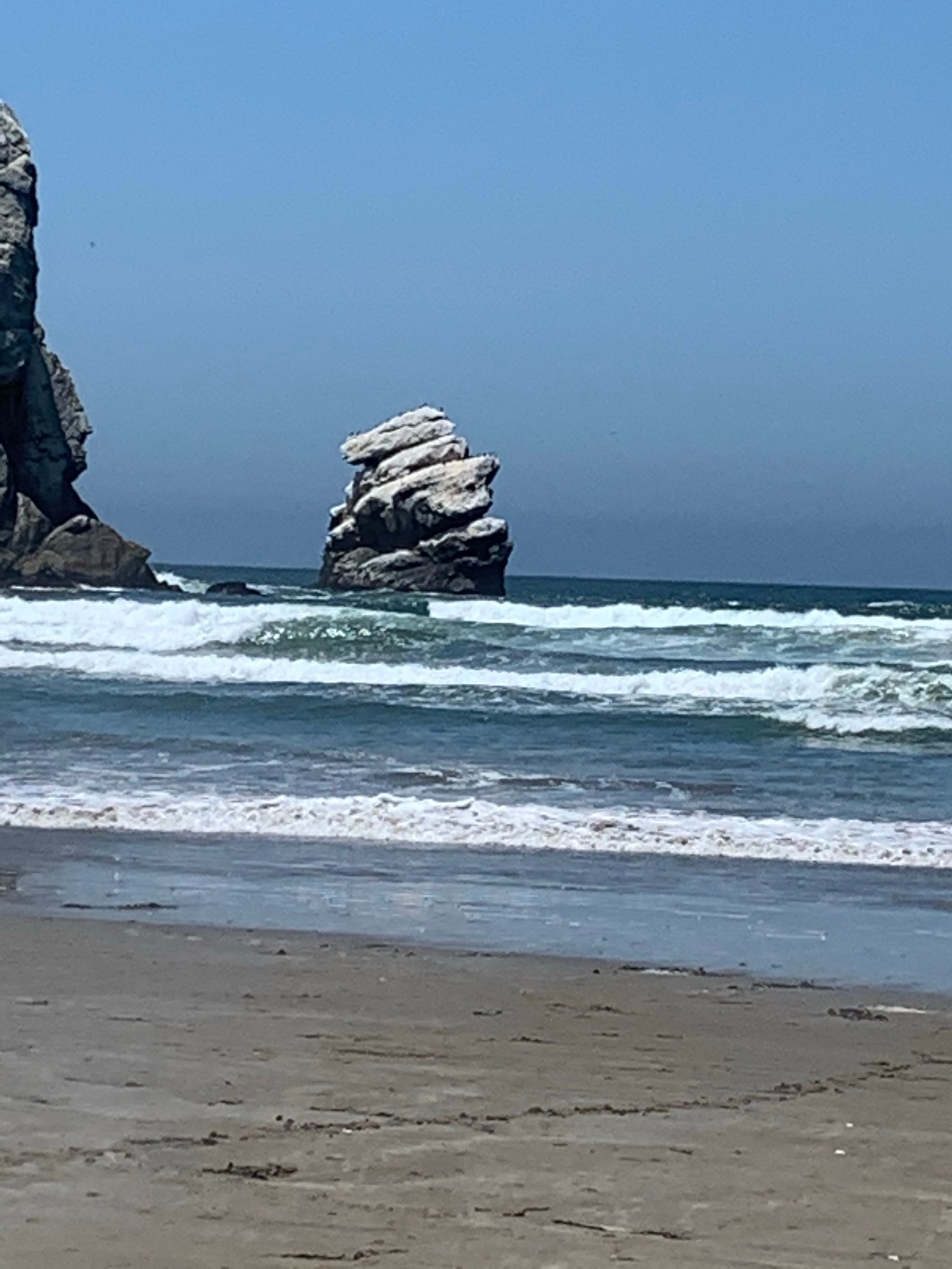
After this, assign a count to the inhalation and exhalation, bringing the breath to Sama Vritti, or Equal Breathing. Perhaps count the inbreath to four, followed by an outbreath of four. After repeating this a few times, start to lengthen the exhale. A few rounds of “inhale four, exhale five” can then move to “inhale four, exhale six,” and so on. Your body will recognize when the exhale is long enough, and so heroics aren’t necessary. Simply continue the pattern; you might think “exhale fear” and “inhale faith” as you proceed. Your breath is like ocean waves, and your body is moving with the pattern.
Continue this for a few rounds, until the feeling of anxiety begins to subside. If stubborn nervousness doesn’t go away, try to stay non-judgmental. Can you sit with the experience and ask it what you need to learn from it? Sometimes feelings need to surface before slipping away. Feel free to start from the beginning and repeat the sequence if that helps.
You might also try giving yourself permission to be anxious, noting what that emotion feels like in the body. Notice the tension. Take a body scan and relax any clenched muscles. Perhaps give yourself a hug. Continue your Sama Vritti, cultivating acceptance of what is happening and a willingness to move through.
If you decide to try this exercise, I would love to hear of your experiences!
 Yoga Cielo Stellato